Bags, boxes and the last things left to clear, gone from the curb. Choose what’s going, see your exact price and book by 2pm for same-day pickup. You don’t need to be home.
Two bags. One filled box. Count what goes, then book it together.
Finish clearing the space
The last few things still deserve a pickup.
You have decided what is going. Now give those bags and boxes a pickup day, with a price you can see before anyone arrives.
The move is nearly done.
Book the unwanted bags and boxes left after packing. Choose an available pickup day before you hand back the keys, and arrange to have them outside.
The clear-out can be finished.
You do not need a whole house of junk. Select the bags, boxes and larger items you actually have. Your combined price is shown online.
You want to know it is handled.
When the next collection does not fit your plans, choose a Dropcurb pickup day. Updates keep you informed, and completion photos show when the booked items are gone.
A few simple choices turn a mixed pile into a clear booking. No need to estimate how much of a truck it might fill.
Filled bags and boxes
Count each trash bag or filled household box. Books and media go by the box. Clothes, bedding and shoes go by the filled bag. Toys packed together have a Box of toys choice. Ask us about unusually heavy or oversized bags and boxes first.
Empty cardboard and containers
Empty cardboard is a different choice: choose single empty boxes or tied bundles of 10 flattened boxes. Compacted bales have their own weight-based choices and require loading-dock access. A Storage bin choice covers the empty bin itself; ask us to confirm the contents if they are going too.
Furniture and other larger items
Add the actual larger item alongside your bags and boxes, such as a sofa, chair or mattress. It has its own price and preparation. Keep construction materials and items needing special handling out of ordinary household bags.
Bulk junk removal prices in Beaverton
First item / additional item
Trash bag$59 / $10
Filled household box$59 / $15
Bag of clothes & bedding$59 / $10
Empty cardboard box$59 / $5
10 flattened cardboard boxes$79 / $20
Box of toys$89 / $29
Dumpster Bag$300 / $250
The highest first-item price applies once. Every remaining item uses its additional-item price. Loading, transportation and disposal are included. Applicable sales tax is shown before payment.
You handle sorting and getting things out of the home or building. We load and haul away the items on your booking from an accessible outdoor spot.
Book by 2pm at the pickup address for same-day pickup, using the dates shown at checkout. Pickup is booked for a day, not an exact arrival time. Confirm any short building-access window with us before booking.
Your place. One easy pickup plan.
A house, a condo or an apartment. Choose an accessible outdoor spot that works for your property. You arrange the move outside; we take it from there.
Add the bags, boxes and separate larger items, then choose an available day. Have an unusual pile or uncertain contents? Send a photo before booking so we can help with the choices.
2
Make the handoff easy.
Bag or box small household items as much as possible. Keep the booked items together, separate from anything staying. Follow your confirmation for when they need to be outside and accessible.
3
Show us what goes.
Add photos and clear pickup-location notes on your order page. You do not need to be home when everything is outside and accessible. We send pickup updates and completion photos.
You’re in the loop. Until it’s gone.
Confirmation when you book. A heads-up before arrival. Photos when it’s done.
Beaverton runs no bulky collection of its own, so large loads go to a regional transfer station or to the hauler as an extra pickup.
City cost & eligibility
From $51 for the Metro transfer station minimum charge for garbage, which covers a load up to 240 pounds and names broken furniture among the accepted material, with heavier loads charged a proportion of the published per ton rate plus a transaction fee per load, and a smaller minimum published for clean wood and clean yard debris. Any household delivering material to a Metro transfer station, with the price depending on the material and the weight. A household can also arrange an extra set-out or a will-call pickup with its franchised hauler at the published city rates.
When & how
Take the load to a Metro transfer station or the WM dry waste recovery facility during posted hours, or arrange the extra pickup with the hauler.
Get it ready
Sort the load before arriving, because clean wood, clean yard debris and organics each carry a lower rate than mixed garbage and a load that mixes material is charged as garbage. Cover the load, since an uncovered load carries an added charge, and keep asbestos, roofing, liquids, burned material and electric vehicle batteries out entirely because the stations refuse them.
Furniture goes to a transfer station as garbage or to the hauler as an extra or special pickup.
City cost & eligibility
From $51 for the Metro transfer station minimum charge for garbage, which explicitly names broken furniture among the accepted material and charges heavier loads at the published per ton rate, with an extra set-out or a special service available from the hauler instead. Any household delivering furniture to a Metro transfer station, or a household arranging an extra set-out or special service with its franchised hauler at the published city rates.
When & how
Deliver the furniture to a transfer station during posted hours, or pay for the extra set-out or special pickup through the hauler.
Get it ready
Keep furniture out of the recycling cart and out of the compost cart, and sort it away from clean wood and yard debris so the load is not charged at the mixed garbage rate. Cover the load on the way to the station.
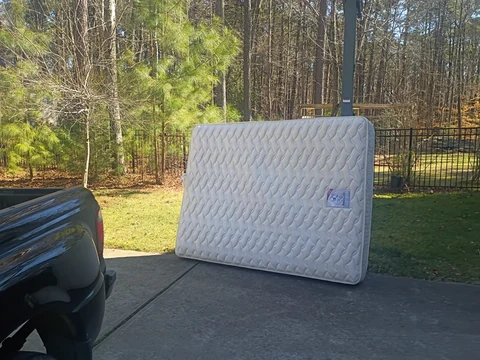
Mattresses are on the city's beyond-the-curb list, so the exact site has to be confirmed before hauling one.
City cost & eligibility
No retained page publishes a mattress price. The city lists mattresses among the materials that cannot go in the mixed recycling and points residents to Metro's Find a Recycler tool for a site, so confirm the location and the fee on that tool or with the city recycling line on 503-526-2665 before loading the piece.
When & how
Confirm the site first, then deliver the mattress during that site's posted hours rather than setting it out with the carts.
Get it ready
Keep the mattress dry and whole, keep it out of both carts, and confirm whether the chosen site charges per piece or by weight when the site is booked.
Appliances are accepted for recycling at the regional sites, and the fee is set at the gate.
City cost & eligibility
The Metro page lists appliances as recyclable material but publishes no appliance rate, and the WM residential drop-off accepts white goods without printing a price, so confirm the fee for the unit with the receiving site before the trip.
When & how
Deliver the unit to a Metro transfer station or the WM dry waste recovery residential drop-off during posted hours.
Get it ready
Empty the unit, remove the doors from a refrigerator or freezer so a child cannot be trapped, and declare a cooling unit at the gate so it is handled as an appliance rather than as scrap metal. Household hazardous waste is refused at the landfill side of the WM property, so a chemical item stays with the hazardous waste route.
Computers, monitors, printers and televisions are banned from the garbage and recycled free through Oregon E-Cycles.
City cost & eligibility
No charge. Free at participating Oregon E-Cycles collection sites for seven or fewer computers including desktops, laptops and tablets, monitors, printers and televisions at a time, and computer peripherals such as keyboards and mice are also free. Other types of electronics are not covered by the program and may carry a fee set by the collection site.
When & how
Bring the items to a participating Oregon E-Cycles collection site during its posted hours. The city links the state drop-off site finder.
Get it ready
Keep computers, monitors, printers and televisions out of the garbage and out of the carts, because Oregon has prohibited them from disposal as garbage since January 1, 2010 and added printers and peripherals on January 1, 2015. Call the chosen site first if the load includes electronics outside the covered categories or more than seven covered items.
Project material goes to the Metro transfer station, which prices clean wood and yard debris below mixed garbage, or to the WM dry waste recovery site.
City cost & eligibility
From $42 for the Metro transfer station minimum charge for clean wood, with engineered wood such as plywood, oriented strand board, particle board, laminated wood and paneling charged as garbage at the higher garbage minimum and per ton rate, and clean yard debris at a lower minimum again. Any household delivering sorted project material to a Metro transfer station, or to the WM dry waste recovery residential drop-off at the Hillsboro property. Loads that mix material types are charged at the garbage rate, and an uncovered load carries an added charge.
When & how
Deliver the load during posted hours, and for a larger project use a hauler or a dumpster service rather than the household vehicles, since the stations refuse vehicles with drive motors.
Get it ready
Separate clean wood from engineered wood and from general debris before arriving, because the rates differ and clean wood has to be free of paint, stain, varnish, strapping, shrink wrap, labels and hardware, with nails allowed. Construction, renovation and demolition loads at the WM property must comply with the state asbestos rules and receive prior approval, and asbestos, roofing, liquids and burned material are refused at the Metro stations.
Exercise machines are not named on any city or regional list, so the piece is confirmed before it is loaded.
City cost & eligibility
No retained page names an exercise machine, and the transfer station charges by material and weight rather than by item, so call the receiving site and describe the machine before hauling it, or ask the hauler about a special service.
When & how
Confirm the site and the likely charge first, then deliver the machine during posted hours or arrange the hauler special service.
Get it ready
Break the machine down as far as it comes apart, separate any metal frame from plastic and upholstered parts, and keep the load covered for the trip, since an uncovered load carries an added charge.
Appliances, batteries, block foam and foam peanuts, Christmas trees, construction salvage and recycling, electronics, fluorescent light bulbs, household hazardous waste, mattresses, medical material, paint, plastic bags and tires cannot go in the mixed recycling and need a site of their own. The city points residents to Metro's Find a Recycler tool and its own recycling line to pick the right site.
Free electronics recycling through Oregon E-Cycles
Oregon has prohibited computers, monitors and televisions from disposal as garbage since January 1, 2010, adding printers and computer peripherals such as keyboards and mice on January 1, 2015. Anyone can bring seven or fewer of the covered items at a time to a participating collection site for free, and other electronics may be accepted for a site-set fee.
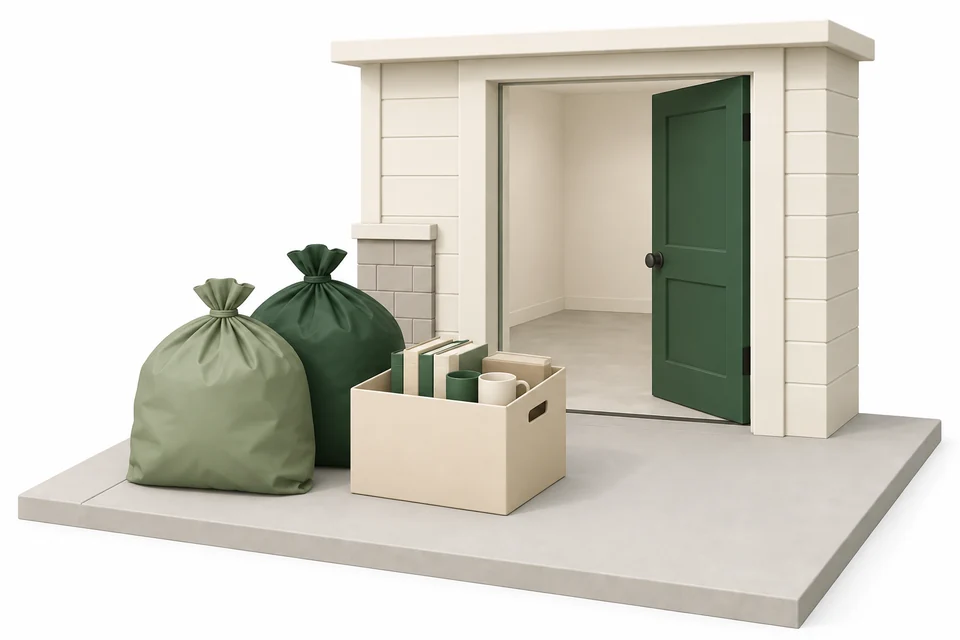
Use a permitted, accessible outdoor spot. Arrange the move out of your home, keep shared access clear and follow your confirmation’s readiness instructions. Check with your building about access or staging limits before booking.
Regional transfer and dry waste recovery site for project loads
WM Hillsboro Landfill and Tualatin Valley Waste Recovery
3205 SE Minter Bridge Road, Hillsboro, OR 97123
The landfill takes dry waste streams and the adjacent dry waste recovery facility runs a public residential drop-off for commingled dry waste or separated material from household projects, including wood, metal, concrete, cardboard, batteries, motor oil, carpet pad, rigid plastics, glass, tin, yard debris, tires, electronics and white goods.
The landfill refuses batteries, electronic waste, explosives, hazardous waste, medical waste, radioactive waste and putrescible or food waste, and the recovery side refuses asbestos, medical waste, explosives, putrescible waste, hazardous waste, biosolids, industrial waste and free liquids. Construction, renovation and demolition loads must comply with the state asbestos rules, including an asbestos survey for qualifying projects and prior approval before arriving.
Monday through Friday from 6 a.m. to 4 p.m. and Saturday from 8 a.m. to noon, with the office open weekdays from 8 a.m. to 4 p.m., and the site is closed Sunday.
The WM rate pages set the tipping fees rather than the facility page retained here, and the nearby Metro transfer station publishes minimum charges between 37 and 51 dollars for loads up to 240 pounds, so confirm the fee for the specific load before hauling it.
Selected customer reviews. Counts checked September 2026.
Before you book
A few things worth knowing.
Bulk junk removal, from choosing your item to pickup day in Beaverton.
How much does bulk junk removal cost in Beaverton?+
A trash bag is $59 as the first item and $10 additional. A filled household box is $59 as the first item. Add your actual items and quantities to see the combined price before booking. Loading, transportation and disposal are included; any applicable sales tax is shown before payment.
Can you pick up bags of junk today?+
Book by 2pm in the pickup address’s local time for same-day pickup. Available dates appear at checkout. Have the booked bags and boxes outside and accessible according to your confirmation. You receive pickup updates and completion photos; the booking is for a day rather than an exact arrival time.
Do I count every object inside a bag or box?+
No. Count the filled bags or boxes using the matching choice. Books and media go in Filled household box; clothes, bedding and shoes go in Bag of clothes & bedding; packed toys have a Box of toys choice. Empty cardboard is separate, with individual empty boxes and bundles of 10 flattened boxes. Heavy, oversized or unusual contents need a photo review before booking.
Can you pick up a small loose pile of household junk?+
Yes. Estimate how many trash bags the small household pile would fill, and bag or box as much as possible. Select furniture and other larger items separately. There is no extra charge just because the pile is loose. Send a photo first if the count or contents are unclear. A household Dumpster Bag choice does not accept construction debris.
Can I book bags, boxes and furniture together?+
Yes. Select the bags and boxes, then add each larger item using its own catalog choice. The booking shows one combined price for the selected items. Move everything to an accessible outdoor spot before pickup; indoor carrying and sorting are not included. Keep anything you want to retain apart from the booked items and identify what goes in your photos and notes.
Where do large items go in Beaverton?+
To a regional facility rather than a city route. The Metro transfer stations accept household garbage and broken furniture at a published minimum charge and per ton rate, and the city lists the nearby transfer stations with what each accepts so the load goes to the right one.Official guidance
Can the hauler take extra material?+
Yes, for a published charge. The city rate page lists an extra solid waste set-out per can or cart up to 32 gallons, a will-call occurrence that includes a recycling and composting cart with a glass bin, and special services charged per hour plus disposal.Official guidance
Will the transfer station take a couch?+
Yes. Broken furniture is named in the garbage category at the Metro transfer station, which carries a published minimum charge for loads up to 240 pounds and a per ton rate above that.Official guidance
Can a couch go out with the carts?+
No. The curbside service is for the carts, and anything larger needs an extra set-out or special service arranged with the hauler or a trip to a transfer station. The city publishes the extra set-out and special service charges on its rate page.Official guidance
Where does a mattress go in Beaverton?+
Mattresses are on the city's non-curbside list, which means they cannot go in the mixed recycling and need a specialty site found through Metro's Find a Recycler tool. The city recycling line is the confirmation point if the tool does not show an option nearby.Official guidance
Will the transfer station take a mattress?+
The Metro page retained here publishes rates for garbage, clean wood, yard debris and organics and does not name mattresses as a separate category, so the site has to be confirmed before the piece is hauled rather than assumed.Official guidance
Will the regional sites take appliances?+
Yes. Metro lists metal dishwashers, microwaves, water heaters, stoves, ovens and clothes washers and dryers among recyclable items at its transfer stations, and the WM residential drop-off at the Hillsboro property accepts white goods and e-waste.Official guidance
What does it cost to drop an appliance?+
No appliance rate is published on the pages retained here, so the fee has to be confirmed with the site. The general transfer station minimum runs between 37 and 51 dollars for loads up to 240 pounds, which gives an idea of the floor for a small load.Official guidance
Which electronics are free to recycle?+
Anyone can bring seven or fewer computers, monitors, printers and televisions at a time to a participating Oregon E-Cycles site for free, and computer peripherals such as keyboards and mice are also free. Other electronics may be accepted at a site-set fee.Official guidance
Can a television go in the trash?+
No. Oregon's E-Cycles program has prohibited computers, monitors and televisions from being disposed of as garbage since January 1, 2010, and printers and computer peripherals were added on January 1, 2015. They go to a participating collection site instead.Official guidance
How is clean wood priced?+
Clean wood carries its own minimum charge and per ton rate at the Metro transfer station, and it has to be separated from other debris and be free of paint, stain, varnish, strapping, shrink wrap, shipping labels and hardware. Engineered wood is charged as garbage at the higher rate.Official guidance
Are there other options for a project load?+
The WM dry waste recovery facility at the Hillsboro property has a public residential drop-off that accepts commingled dry waste or separated material from household projects, including wood, metal, concrete, carpet pad and rigid plastics, and it refuses asbestos, hazardous waste, putrescible waste and free liquids.Official guidance
Where can exercise equipment go?+
The city's beyond-the-curb list does not name exercise machines, so the load is priced as garbage by weight at a Metro transfer station or handled as a hauler special service. Confirm with the site before hauling it.Official guidance
Can the hauler collect a machine?+
The city rate page lists special services charged per hour plus disposal, which is the route for an item that does not fit an extra set-out, and the request goes to the franchised hauler for the address.Official guidance
Who handles construction and demolition loads?+
The haul goes to a Metro transfer station or to the WM dry waste recovery site, and any load of construction, renovation or demolition material at the WM property has to comply with the state asbestos rules, including an asbestos survey for qualifying projects and prior approval before the load arrives.Official guidance
Is there a charge for an uncovered load?+
Yes. Metro adds an uncovered load charge of 25 dollars per ton, or 3 dollars on a minimum load, because an uncovered load is a hazard and can draw a littering fine, so cover or tarp any load taken to a transfer station.Official guidance
One less thing on your list
Get the last things off your list.
Choose your bags, boxes and larger items. See the price and book a day that works.